
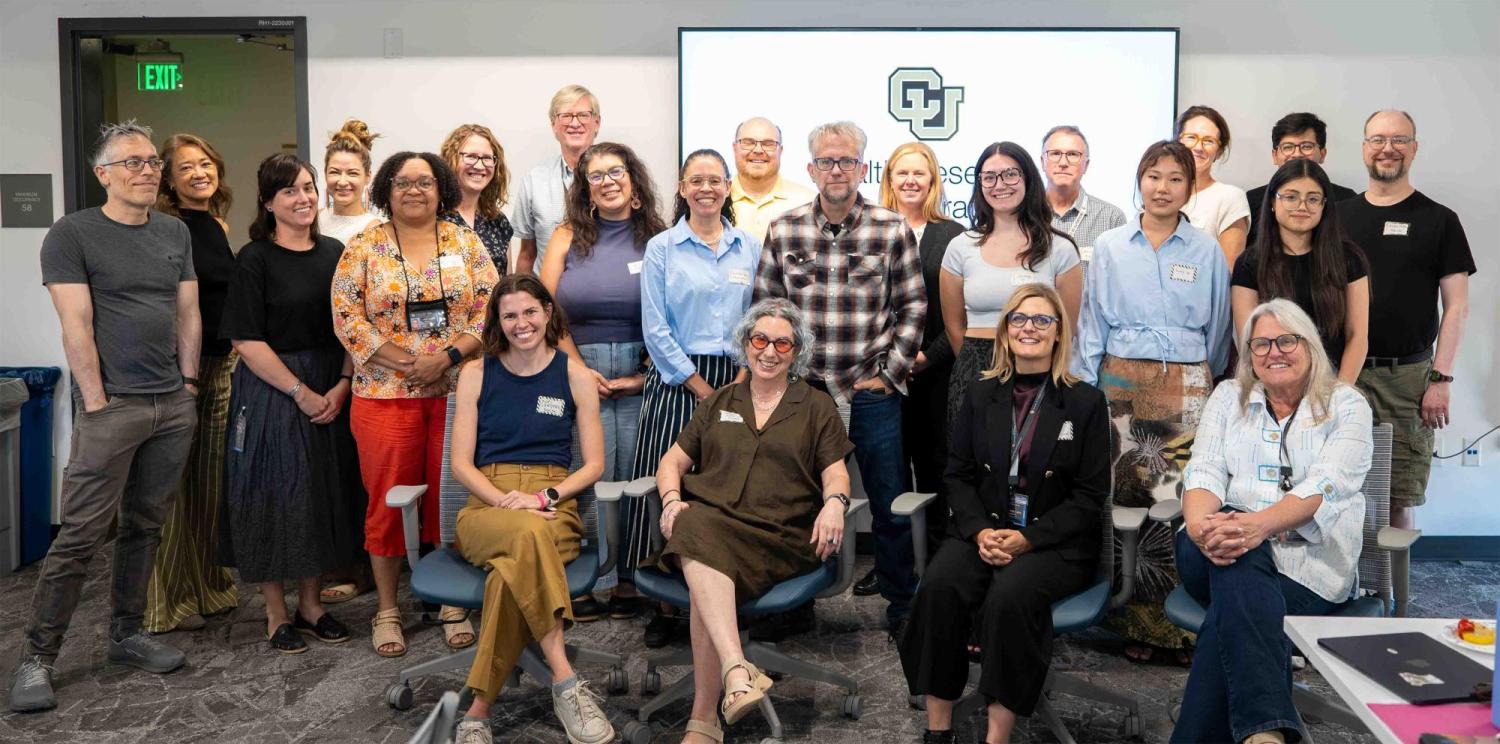
Health challenges don’t fit neatly into one discipline—and neither does research at CU Denver’s College of Liberal Arts and Sciences (CLAS).
The Health Research Collaborative (HRC) brings together faculty and students from the natural sciences, social sciences, and humanities to explore health, illness, and wellbeing from multiple perspectives.
Through interdisciplinary research, workshops, collaborative projects, and an annual symposium, the HRC connects expertise across fields and creates new opportunities to address complex health challenges—from biological and environmental processes to mental health, health equity, communication, culture, and healthcare systems. The Collaborative was created not only to strengthen connections among CLAS researchers, but also to expand opportunities for undergraduate and graduate students to participate directly in health-related research.
Anthropology
| Name | Area of Health Research | Bio |
|---|---|---|
| Sarah Horton | latine health disparities, immigrants' access to health care, migration, financialization of US health care, health care policy, occupational health, affordable housing | Dr. Sarah Horton is an engaged anthropologist whose areas of expertise include US Latine immigrants' health care access and occupational health. Since 2018, she has been conducting research on Latine immigrants' struggles for well-being, health care inclusion and affordable housing in Colorado's ski resort areas, a "new" immigrant destination. She is author of the award-winning "They Leave Their Kidneys in the Fields: Illness, Injury, and "Illegality" among US Farmworkers (University of California Press, 2016). |
| Marty Otanez | Medical and visual anthropology, BIPOC psychedelics, community engaged research and creative work | Marty’s research and creative work includes diverse reasons BIPOC and low-income individuals sit with psilocybin and their concerns about medicalization and corporatization of psilocybin in Colorado. |
| Anna G. Warrener | human evolution, biomechanics, pelvis, childbirth, locomotion, shoulder evolution | Dr. Warrener is a biological anthropologist interested in how evolution has shaped the human body. In particular, Dr. Warrener's work focuses on the evolution of the pelvis, bipedal locomotion, and childbrith. More recently she has begun investigating how human shoulder anatomy has been shaped through adaptation and developmental plasticity. |
Biology
| Name | Area of Health Research | Bio |
|---|---|---|
| Kaia Mattioli | genomics, gene regulation, transcription factors, MPRAs, CRISPR screens | Dr. Mattioli is a hybrid experimental and computational biologist who studies how RNA processing goes awry in cancer, focusing on women's cancers. She received her PhD from Harvard University and joined CU Denver in 2026. |
| Christopher S. Miller | Bioinformatics, genomics, environmental microbiology, environmental pollution, bioremediation, antimicrobial resistance | Working with diverse collaborators, Dr. Miller’s research group uses bioinformatics and genome-enabled approaches to study microbial communities in the context of environmental pollutants. Recent work has focused on microbial bioremediation of environmental pollutants, the impact of contaminants on animal microbiomes, the environmental distribution of antimicrobial resistance genes, and evaluating and improving computational methods for studying biological systems. |
| Annika C. Mosier | environmental microbiology; microbial ecology; microbial physiology; chemical detoxification; remediation; | |
| Michael Moore | Animal Physiology, Evolutionary Adaptation, Climate Change, High Altitude, Reproduction | Dr. Moore is an environmental physiologist who studies the reproductive physiology of animals on a changing planet. He received his Ph.D. from Case Western Reserve University in 2019 and joined CU Denver in 2022. |
| Christopher J. Phiel | Understanding enzyme glycogen synthase kinase-3 (Gsk-3) function in maintaining pluripotency of embryonic stem cells | |
| Greg Ragland | Population genomics, metabolism and developmental arrest, stress physiology, biological clocks | |
| Timberly Roane | environmental microbiology; microbial ecology; microbial physiology; chemical detoxification; remediation; | Dr. Timberley Roane is an associate professor of microbiology in the Department of Integrative Biology and is a co-director for the Environmental Stewardship of Indigenous Lands Certificate. In addition to teaching microbiology courses, Dr. Roane sponsors graduate and undergraduate students in her microbiology research laboratory learning how microorganisms interact with their environments especially those impacted by toxic chemicals. Dr. Roane advises students with diverse backgrounds and experiences and is openly available to talk through career options within and outside of the field of microbiology. |
| Alan Vajda | Endocrine Disruption, Environmental Toxicology, PFAS, Environmental estrogens, Wastewater re-use, Restoration, Water, Fish, Eco-human Health | Alan M. Vajda is a Professor of Integrative Biology at the University of Colorado Denver, where his laboratory studies environmental contaminants as an emerging eco-human health issue. Working with the U.S. Geological Survey and academic partners, he uses on-site mobile-laboratory exposure experiments to link contaminants to biological effects in aquatic organisms, from endocrine-active chemicals in wastewater-influenced streams such as Boulder Creek and the South Platte to PFAS in the groundwater plume left by historical fire training activities at Joint Base Cape Cod, Massachusetts. His work also examines how water management and treatment decisions can reduce risks to both wildlife and human health. |
Chemistry
| Name | Area of Health Research | Bio |
|---|---|---|
| Jeff Knight | biochemistry, biophysics, protein chemistry, diabetes, exocytosis | Dr. Knight's lab studies the biochemistry and biophysics of membrane-binding proteins involved in insulin secretion. One goal is to uncover the molecular origins of defective insulin secretion in early stage diabetes and prediabetes. Approaches include mass spectrometry, fluorescence spectroscopy, single-molecule microscopy, bioinformatics, and collaboration with computational chemistry and biophysics labs. |
| Jung-Jae Lee | biomedical imaging, nanomedicine, precision surgery, cancer diagnostics, drug delivery, ophthalmology | Dr. Jung-Jae Lee is an Associate Professor of Chemistry at CU Denver/Anschutz, where he directs the Laboratory of Nanomedicine. His research spans near-infrared chemiluminescent nanoprobes for imaging-guided surgery in head and neck squamous cell carcinoma, as well as a zinc-based therapeutic contact lens that deactivates corneal-melting enzymes to treat corneal disease. He collaborates closely with the Head and Neck Cancer Research Center (HNCRC) at CU Anschutz to translate these platforms toward clinical application. |
| Woonghee Lee | biomolecular NMR, protein structure and function, integrative structural biology, infectious disease, AI/ML, automated NMR analysis, integrated software, big data | |
| Hai Lin | computer-aided drug design, molecular modeling | Dr. Lin develops multiscale simulation algorithms for computer modeling and applies these methods to study membrane proteins and ion transporters. He joined CU Denver in 2005. |
| Marino J. Resendiz | Bio-Organic Chemistry, Physical Organic Chemistry, Organic Synthesis | The research focus in the Resendiz lab revolves around structure function relationships of chemically modified RNA with biological implications and potential as therapeutics. |
Communication
| Name | Area of Health Research | Bio |
|---|---|---|
| Hamilton Bean | resilience, disaster, emergency warnings | Dr. Hamilton Bean specializes in the study of communication and security with an emphasis on mobile public alert and warning systems and messages. He was part of a U.S. Department of Homeland Security-funded research team that investigated the optimization of Wireless Emergency Alert (WEA) messages for imminent threats. |
| Yvette Bueno-Olson | health communication, family communication, | |
| Sarah K. Fields | sport, law, injury, concussion, CTE | Dr. Sarah K. Fields' research explores the intersection of sport and American culture through interdisciplinary lenses. She is has published extensively on high school sports injury, been cited in a Supreme Court decision, and worked as an expert in CTE lawsuits. |
| Lisa Keranen | rhetoric of health and medicine, biological threat construction, infectious disease discourse, biosecurity | Dr. Lisa Keränen specializes in the rhetoric of health and medicine, investigating how language structures meaning and understanding of health risks related to infectious disease, contested illness, and biomedical controversies. Her publications appear in venues such as Academic Medicine, Rhetoric of Health & Medicine, Quarterly Journal of Speech, and Western Journal of Communication. |
| Xiyuan Lin | qualitative health communication | Dr. Liu adopts a culture-centered approach to study health in contexts via qualiative methods. |
| William Ordeman | Health rhetoric, web scraping, open-source intelligence, COVID-19, vaccine hesitancy, disinformation | Dr. Ordeman is a rhetorician whose work investigates how patients, providers, and politicians engage with rhetorics of health. His research on health communication and border rhetoric has been published in the Rhetoric Society Quarterly and Rhetoric of Health & Medicine. His more recent research in disinformation studies and open-source intelligence (OSINT) has been published in Rhetoric Review. |
| Tamara Powell | Health and organizational communication; collaboration in healthcare teams; medical education; patient/family education; pediatric rehabilitation medicine | Dr. Powell is a health communication scholar whose work bridges organizational and therapeutic communication to help practitioners and health-promoting organizations translate evidence into effective, human-centered health messages and clinical interactions. |
Economics
| Name | Area of Health Research | Bio |
|---|---|---|
| Chun-Chieh Hu | health economics, labor economics, applied econometrics, quasi-experimental design, program evaluation (RCTs), public policy analysis | Dr. Hu is an economist who specializes in health and labor economics, using applied econometric methods to study mental health and workforce outcomes, and the effects of public policy on economic behavior. |
| Hani Mansour | health behaviors |
English
| Name | Area of Health Research | Bio |
|---|---|---|
| Kari Campeau | rhetoric of health and medicine, vaccine hesitancy, and experimental microbiome healthcare | Dr. Kari Campeau's research has focused on medical dissent; using qualitative and rhetorical methods, she has studied vaccine hesitancy, experimental microbiome healthcare, and unsanctioned uses of clinical trial participation. |
Geography and Environmental Sciences
| Name | Area of Health Research | Bio |
|---|---|---|
| Peter Anthamatten | children, quantitative, spatial, analysis, urban, environments | Dr. Peter Anthamaten's research sits at the intersection of geography, public health, and spatial analysis, investigating how built and natural environments influence human health outcomes and active living behaviors. A dedicated educator and cartographer, he is the author of How to Make Maps and co-author of the textbook An Introduction to the Geography of Health. |
| Kathy Kelsey | environmental health - interactions between the biosphere and the atmosphere | Dr. Kathy Kelsey is an Environmental Scientist who specializes in understanding the impacts of climate change on ecosystems, and the relationship between ecosystem and climate. |
Health and Behavioral Science
| Name | Area of Health Research | Bio |
|---|---|---|
| Michael Barrale | MCH nutrition, global food fortification, ready-to-use therapeutic food (RUTF) development/use, sustainability and cost effective nutrition interventions | Michael Barrale's partnership with the International College of Beijing allows him to use his desire to promote both health and education internationally, creating a global classroom that focuses on inclusion, collaboration, and innovation. He is passionate about researching and improving nutrition status in vulnerable populations around the world. |
| Jennifer Morozink Boylan | psychological factors and chronic disease; lifecourse development; health disparities | Dr. Jennifer Morozink Boylan's research centers on 1) understanding the components of psychological well-being and its potential influence on physical health, 2) situating psychological risk and protective factors within broader social contexts (e.g., socioeconomic status (SES), race, and culture), and 3) examining biological mechanisms underlying how the social environment affects cardiometabolic disease pathophysiology. |
| Patrick Krueger | death and other afflictions, statistics, demography | Dr. Krueger unerringly finds joy in using statistical and demographic methods to understand social disparities in deaths and health behavior patterns. |
| Rae Anne Martinez | biological embedding (epigenetics, inflammation, persistent infections); social-structural determinants; health inequities; life course research; meta-science | Dr. Martinez is a social epidemiologist interested in understanding how social-structural determinants are embodied – i.e., “get under the skin” – and may result in later-life health inequities of chronic conditions. Her research focuses on exploring accelerated biological aging as a mechanism of embodiment, characterizing biological aging at midlife as a key point in the life course for intervention to increase health span, and conceptualizing structural racism (a key social-structural determinant) beyond the Black-White binary for quantitative studies. A cross-cutting theme throughout her research is the exploration of how historical and contemporary conceptualizations of race and ethnicity impact epidemiologic methods, scientific communication, and our ability as population health scholars to form a rigorous evidence base |
| Ivan J. Ramírez | Climate change, geospatial analysis, social vulnerability, disasters and early warning systems, community engagement | Dr. Ramírez is a geographer strongly motivated by justice and equity in his scholarship which focuses on climate, spatial health and community engagement. He directs the Civic Engagement and Climate Justice (CECJ) ThinkLab, which advances interdisciplinary climate and disaster research with undergraduate and graduate students while supporting faculty and staff through community-building workshops. |
| Ronica Rooks | gerontology, sociology, public health; race/ethnicity, employment, and cognitive functioning; gentrification and older adults’ quality of life (e.g., mental and physical health and well-being) | Dr. Rooks is a gerontologist, whose research focuses on social-ecological explanations for racial and ethnic disparities in chronic conditions. Her current research explores if working and volunteering, as productive activities, can mitigate Black vs. White racial disparities in dementia and cognitive changes over time among older adults in the longitudinal Health, Aging, and Body Composition Study and Health and Retirement Study. |
| Karen Lutfey Spencer | Medical decision making, health disparities, patient-provider relationships, and patient adherence, studied from largely qualitative perspectives. | |
| David P. Tracer | Global Health, Maternal-Child Health, Nutrition, Growth and Development, Health Decision Science | Dr. Tracer's research is grounded in evolutionary, economic and anthropological theory. His interests have focused on ecological aspects of maternal and child health including nutrition, growth and development, and determinants of fertility. He has also studied decision-making and trade-offs. His research has been conducted in Papua New Guinea, Israel, and in the US and Europe. |
| Sara Yeatman | Reproductive health, fertility, contraception | Dr. Yeatman is a social demographer with expertise is in the areas of fertility and reproductive health. Her research focuses broadly on understanding the causes and consequences of the misalignment of fertility desires and behaviors. Her research also examines changing access to reproductive healthcare and its implications for health and wellbeing. |
History
| Name | Area of Health Research | Bio |
|---|---|---|
| Erin AustinGabriel Finkelstein | history of neuroscience, madness, and biology | "Lorem ipsum dolor sit amet, consectetur adipiscing elit, sed do eiusmod tempor incididunt ut labore et dolore magna aliqua. Ut enim ad minim veniam, quis nostrud exercitation ullamco laboris nisi ut aliquip ex ea commodo consequat. Duis aute irure dolor in reprehenderit in voluptate velit esse cillum dolore eu fugiat nulla pariatur. Excepteur sint occaecat cupidatat non proident, sunt in culpa qui officia deserunt mollit anim id est laborum." |
| Marjorie Levine-Clark | history of medicine and health research focuses on relationships among labor, gender, poverty, health, and welfare in nineteenth- and twentieth-century England. |
Mathematical and Statistical Sciences
| Name | Area of Health Research | Bio |
|---|---|---|
| Erin Austin | biostatistics, statistical epidemiology of respiratory diseases, genetics | Dr. Erin Austin's research uses existing or develops novel statistical methods to further a clinically translatable understanding of diseases such as COPD. |
Modern Languages
| Name | Area of Health Research | Bio |
|---|---|---|
| Maria Luisa Fernandez Martinez | medical spanish, peninsular spanish film and narrative, women's studies and age studies | Dr. Maria Luisa Fernández Martínez is dedicated to enhancing communication between healthcare providers and Spanish-speaking patients, addressing disparities in healthcare access, and promoting equity within the medical field. |
Philosophy
| Name | Area of Health Research | Bio |
|---|---|---|
| Candice Shelby | addiction, philisophical issues associated with psychedelic-assisted psycotherapy, neuroscience | Candice Shelby is a philosopher working in the areas of philosophy of psychology and addiction. She published a book on addiction in 2016 and has continued to give talks worldwide, and to contribute intellectually to the recovery community. |
Physics
| Name | Area of Health Research | Bio |
|---|---|---|
| Masoud Asadi-Zaybdabadi | nonlinear dynamics and chaos, biological modeling, and medical physcis | Dr. Masoud Asadi-Zaybdabadi has been involved in developing biophysics and medical track in CU Denver physics department from the beginning. He is interested in computational physics and he established the computational physic lab. He is also interested in physics education. |
| Michael Rogers | 3D Imaging of Wrist Joints and Spinal Implants | Dr. Rogers is a Ph.D. Physicist and a Registered Professional Archaeologist who specializes in Physics & Astronomy Education Research, Geophysical Archaeology, and 3D Imaging. |
Psychology
| Name | Area of Health Research | Bio |
|---|---|---|
| Benjamin Greenwood | stress resilience, exercise behavior, sex differences | Dr. Benjamin Greenwood studies biological mechanisms of behavioral stress resilience and maintenance of physical activity |
| Kristin Kilbourn | psychosocial oncology, cancer survivorship and palliative care, patient navigation, health promotion | Dr. Kilbourn’s research focuses on community-based health promotion, psychosocial oncology and palliative care with an emphasis on developing and testing psychosocial interventions. She is also interested in developing programs that impact physical and emotional well-being/flourishing on the CU Denver campus. |
| Karena Leo | couples’ communication, observational coding methods, psychosocial intervention for couples coping with chronic and life-threatening illnesses, couple-based interventions | Dr. Leo's research focuses on couples’ communication within the context of serious illnesses with the goal of developing and disseminating scalable interventions to improve communication, relationship functioning, and psychological and physical health outcomes. Her research centers on 1) developing and improving methods to identify and quantify communication processes in couples, 2) examining the association between couples’ communication and relationship, psychological, and health processes, and 3) developing scalable couple-based interventions. |
| Krista Ranby | Health behavior, interpersonal influence, romantic couples, smoking cessation, physical activity, behavioral medicine | Dr. Ranby comes to the study of health behavior from the perspective of social and quantitative psychology. She is particularly focused on ways in which close relationship partners affect each other's health. Dr. Ranby is interested in disease prevention through the promotion of physical activity and smoking cessation. Further, she has a particular interest in life transitions (e.g., marriage, pregnancy, disease diagnosis) as a naturally occurring opportunity for behavior change. Her work considers intervention targets for encouraging behavior change within romantic relationships such as joint planning (i.e., collaborative implementation intentions) and consideration of whether partners view each other’s health as their responsibility (i.e., partner investment). Finally, Dr. Ranby does dyadic work within several patient populations (e.g., diabetes, bone marrow transplant, cancer, heart disease) through collaborations with researchers at the Anschutz medical campus. |
| Jonathan Shaffer | Biopsychosocial Factors in Cardiovascular Disease Psychological and Behavioral Interventions for Cardiovascular Disease | Dr. Jonathan A. Shaffer is a core faculty member in the Clinical Health Psychology doctoral program within the Department of Psychology where he is involved in teaching, mentoring, and research. He is a licensed clinical psychologist with training in cardiovascular behavioral medicine and quantitative methodology. Dr. Shaffer has an active research lab and mentors both undergraduate and graduate students. His research focuses on: (1) the role of biopsychosocial factors in cardiovascular diseases and (2) the health predictors, correlates, and outcomes of meaning and purpose in life. He has expertise conducting systematic reviews and meta-analyses as well as secondary data analyses. |
| Mel Simone | Eating disorder prevention; queer and trans populations; community-engaged research; scale development; mixed-methods research; online data integrity | Dr. Simone is a quantitative psychologist and sociobehavioral epidemiologist. Dr. Simone has an active NIMHD-funded research lab that involves community members, as well as undergraduate and graduate students. Their program of research focuses on: 1) eating disorder prevention among queer and trans young people from a social justice and socioecological framework; 2) community-engaged research and resource co-creation to address health disparities; 3) the development of more equitable psychology assessments and scales; and 4) data integrity and bot detection in online research. |
| Amy Wachholtz | bio-psycho-social-spiritual model, pain management (acute and chronic), opioid use disorder, psychopharmacology | Dr. Wachholtz is a clinical health psychologist and psychopharmacologist with research interests in the bio-psycho-social-spiritual model of health and wellbeing generally with a particular interest in pain managment and opioid use disorder. |
| Jason Watson | environment, cognition, mental health, affect, attention, nature | Dr. Watson is an experimental cognitive psychologist with a longstanding interest in the control of attention - defined as maintaining task goals and minimizing distractions - as it relates to human behavior and its neural/psychophysiological correlates as observed in both more traditional laboratory contexts and in more applied settings. Dr. Watson’s research has increasingly begun to focus on what impact interacting with nature or urban environments may have on affect, attention, and mental health. Consistent with this idea, Dr. Watson’s most recent empirical work suggests interacting with nature may calibrate the control of attention, thereby optimizing performance during certain cognitive tasks. Given his interdisciplinary research interests in environment and cognition, Dr. Watson is the lead guest editor of a Special Issue on nature’s influence on attention that will be published in 2027 at the Journal of Cognitive Psychology. Dr. Watson is also the Principal Investigator for the Society for Nature and Cognition, a newly formed, collaborative research group who meets in conjunction with the annual scientific meeting of the Psychonomic Society. |
Sociology
| Name | Area of Health Research | Bio |
|---|---|---|
| Edelina Burciaga | immigrant well-being, reproductive justice | Dr. Edelina Burciaga’s research focuses broadly on the experiences of Latinas/os in the United States. Specifically, she examines the experiences of undocumented immigrants who came to United States as children. She uses qualitative methods to understand how federal, state, and local laws and policies shaped the educational and career trajectories, ethnic identity development, and activism of undocumented young adults. |
| Jennifer Reich | Vaccines, pediatric care, reproduction | Dr. Jennifer Reich's research examines how individuals and families weigh information and strategize their interactions with the state and service providers in the context of public policy, particularly as they relate to healthcare and welfare. She is author of two award-winning books, Fixing Families: Parents, Power, and the Child Welfare System and Calling the Shots: Why Parents Reject Vaccines and editor of the books, Reproduction and Society and State of Families, and the NYU Press book series, Health, Society, and Inequality. Her work has been featured in news outlets including the New York Times, the Washington Post, National Public Radio, and BBC, and on the Netflix show, Bill Nye Saves the World. |
| Catherine Simmons | Behavioral Health and Trauma-Informed Care: Research focused on trauma, PTSD, intimate partner violence, military populations, and mental health screening, with an emphasis on improving access to services and strengthening trauma-informed systems of care. Healthcare Evaluation and Systems Improvement: Expertise in program evaluation, strengths-based assessment, and the development of evidence-informed approaches that improve service delivery, workforce preparation, and organizational effectiveness. | Dr. Catherine A. Simmons, PhD, LCSW, is a Professor of Social Work and founding Bachelor of Social Work program director at the University of Colorado Denver. A licensed clinical social worker in CO & TN, she brings more than a decade of clinical practice experience and nearly twenty years in higher education. Dr. Simmons is a nationally recognized scholar, educator, and academic leader whose research focuses on ethics, leadership, political social work, measurement and evaluation, trauma-informed systems, and issues related to gender, power, violence, and oppression. She is widely known for her strengths-based approach and for leading the development of innovative academic programs, workforce initiatives, and community partnerships. |
| Esther Sullivan | housing, healthy homes, environmental sociology, drinking water quality, natural hazards/disasters | Esther Sullivan's research focuses on housing stability, poverty, environmental inequality, legal regulation, and the built environment, with a special focus on manufactured housing and issues facing manufactured/mobile home communities. |