
RACAS Week 2026 · Research Spotlight
Along with co-funding from the Research Development Office (RDO), three CLAS Health Futures Seed Grants were funded across the College of Liberal Arts and Sciences to tackle some of health's most pressing questions — proving that the path to better health runs through every discipline. CLAS also worked to co-fund additional Humanities Seed Grants submitted to RDO.
What does chemistry have to do with cancer surgery? What can the humanities teach us about the future of health care? And how does going to college shape your happiness decades later? At CU Denver's College of Liberal Arts and Sciences, these aren't separate questions — they're part of the same conversation.
This spring, CLAS awarded its inaugural CLAS Health Futures Seed Grants, funding three interdisciplinary research projects that reflect the remarkable breadth of health-related scholarship happening across the college. From nanotechnology to demography to the health humanities, these projects demonstrate that understanding — and improving — human health requires every tool in the academic toolkit.
As we move towards more collaboration and coordination with RDO, co-funding between CLAS and RDO allowed not only three of the CLAS Health Futures Seed Grants to be funded but also two other Humanities Seed Grants submitted to RDO.
Project #1
Lead: Jung-Jae Lee · Department of Chemistry
A surgical GPS for cancer: Nanotechnology-guided tumor removal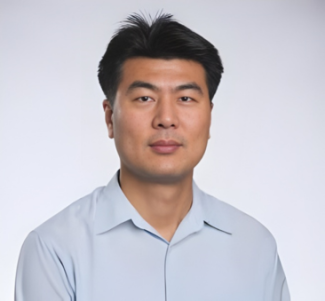
Surgeons removing a tumor face one of medicine’s most difficult judgment calls: where does the cancer end and healthy tissue begin? Jung-Jae Lee and his team are developing a nanotechnology-based answer. Their nanoprobes are engineered to seek out and attach to tumor cells, then glow under a specialized surgical camera — giving surgeons a real-time visual map during the operation.
“We’re making a surgical GPS,” Lee explains. Because the probes can be designed to target different tumor types, the technology has broad potential across many forms of cancer. The team’s near-term goal is to demonstrate that the probes work reliably in a surgical setting — a key step toward eventual clinical use.
Perhaps just as notably, the research is being driven largely by undergraduate and graduate students at CU Denver, who are gaining hands-on experience in NIH-funded biomedical science while working on a project with real-world stakes.
Project #2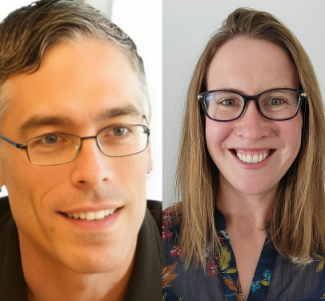
Leads: Jennifer Morozink Boylan & Patrick M. Krueger · Department of Health and Behavioral Sciences
Beyond the absence of despair: Education, psychological well-being, and health across a lifetime
Most research on the relationship between education and health focuses on what goes wrong — deaths of despair, loneliness, depression. Jennifer Morozink Boylan and Patrick Krueger are asking a different question: what does it look like when things go right?
Their project examines how educational attainment shapes positive aspects of psychological well-being — happiness, sense of purpose, life satisfaction — across midlife and later life, and how those factors in turn affect disparities in conditions like hypertension, diabetes, and overall mortality. The team brings together the tools of demography and psychological science to ensure their findings speak to the full American population, not just select groups.
“Positive mental health is more than simply the absence of despair, loneliness, or mental distress,” the team notes. By modeling optimal psychological functioning across the life course, they hope to identify where interventions might do the most good — and for whom.
Project #3
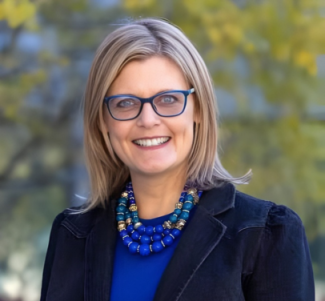
Leads: Lisa Keranen, Marjorie Levine-Clark, Kari Campeau & Colleen Donnelly · Departments of Communcation, English, Health & Behavioral Sciences, History, Sociology, and more
Building a home for health humanities at CU Denver
CLAS faculty study an extraordinary range of health topics: the biological mechanisms of diabetes, the language of viral threats, the dynamics of vaccine decision-making, disability, end-of-life discourse, medical paternalism, Alzheimer’s interventions, and much more. What has been missing, until now, is a shared home for that work.
Lisa Keranen and her co-investigators are launching the CLAS Health Research Collaborative (HRC), an umbrella organization designed to connect health researchers across the college, seed larger collaborative grant projects, and amplify CLAS’s collective impact. In its inaugural year, the HRC will focus on the health humanities — organizing monthly workshops for scholars, developing external funding proposals with the Research Development Office, and hosting a spring symposium.
“We’re excited to nurture the health humanities and recognize their essential role in foregrounding the human dimensions of health care in an increasingly technological world.”
Health humanities scholarship draws on culture, history, literature, film, and the arts to illuminate the lived experience of illness and care. As a field, it cultivates the empathy, communication skills, and cultural awareness that health care providers — and patients — need. Faculty working in these areas are housed across Anthropology, Communication, English, Geography and Environmental Sciences, Modern Languages, Philosophy, Psychology, and beyond.
Project #4
Leads: Soumia Bardhan & Joanne Addison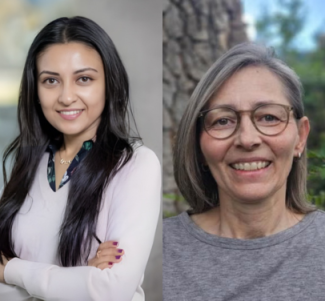 · Departments of Communication and English
What does AI do to intelligence? Equity-centered research on students and generative AI.
As generative AI becomes woven into academic writing, communication, and civic life, a pressing question emerges: how are students actually experiencing it? Not as a tool to be regulated or optimized, but as something that reshapes how they think, create, and express themselves. Joanne Addison and Soumia Bardhan are determined to find out.
Their project takes a humanities-centered, equity-driven approach, treating intelligence not as a technical attribute of machines but as something relational, culturally situated, and deeply human. At a federally designated Minority Serving Institution like CU Denver — where students bring extraordinary linguistic, cultural, and socioeconomic diversity — that framing matters enormously. Standard surveys and performance metrics can’t capture how AI reshapes meaning-making for students whose identities and experiences shape their relationship to authorship, creativity, and judgment.
To get at those questions, the team will adapt the Experience Sampling Method (ESM), a technique that captures real-time experiences as they happen, to study students in core-curriculum English and Communication courses. Longitudinal data from ESM will be combined with interviews and focus groups to reveal how students engage with — and sometimes resist — AI in practice. Findings will feed directly into curricular prototypes and faculty development work, with an eye toward external funding from foundations like Mellon, Spencer, and MacArthur.
Project #5
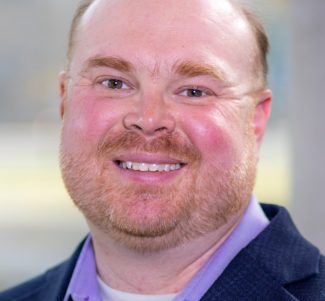 Leads: Jefferson Knight · Chemistry
Catching Type 1 diabetes before it starts: A molecular investigation
Type 1 diabetes affects more than 8 million people worldwide, and by the time it is diagnosed, the damage is already done: the immune system has destroyed the insulin-producing β-cells of the pancreas. But new research suggests that β-cell function begins to decline even earlier, before that immune attack begins — and Jefferson Knight wants to know why.
Knight’s team is investigating a process called protein carbonylation, in which inflammation triggers a cascade of oxidative stress reactions that chemically damage and inactivate a subset of β-cell proteins. Their earlier work in mouse models demonstrated that this damage impairs insulin secretion in prediabetic animals. Now, with this seed funding, they are taking the next critical step: translating those findings into human systems, using cultured cells and human pancreatic islets from collaborators at Anschutz and City of Hope.
The team will expose these human samples to inflammatory molecules associated with pre-Type 1 diabetes, then test whether blocking the carbonylation process can restore normal insulin secretion. If the hypothesis holds, it could open a new window for early diagnostics — and potentially for treatments that delay or prevent the disease’s onset entirely. The grant will also support recruiting and training a CLAS student researcher, building the next generation of biomedical scientists at CU Denver.