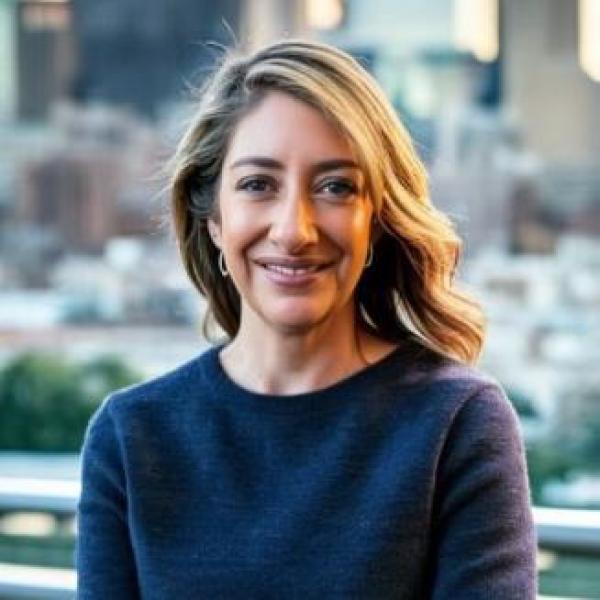
When Emily Mrig reflects on her path to medical anthropology, it was not a straight line. As an undergraduate at Scripps College, part of the Claremont Colleges in California, she majored in History and Hispanic Studies and minored in Biology. At the time, she anticipated going to medical school. Anthropology was not initially on her radar.
What ultimately drew her to CU Denver’s MA program in Medical Anthropology was the opportunity to approach medicine through a social science lens. She became interested in examining health and medicine at a broader population level. Medical anthropology offered a way to study how people make meaning of health, illness, and care while also interrogating structural inequities and disparities embedded within healthcare systems.
While convenience brought her back to Colorado, it was the faculty and intellectual culture that kept her at CU Denver. She highlights the program’s interdisciplinary strength and applied orientation as defining features. Unlike programs that lean heavily theoretical, Emily found CU Denver uniquely committed to showing students how anthropology can be practiced beyond the academy. “You can do a lot with an MA in anthropology,” she explains. “That rigor, that way of thinking, being able to make high level connections and apply them, translates almost anywhere.”
That applied foundation has shaped her career. After completing her MA, Emily pursued a PhD in Health and Behavioral Sciences, an intentionally interdisciplinary path that allowed her to integrate anthropological training with broader social science methods. Today, she identifies as a mixed methods researcher, but she is clear about where her core strength lies. Qualitative research grounded in anthropological rigor.
“The deep listening, the cultural analysis, the comfort with ambiguity, that’s my superpower,” she says. She credits her MA thesis and anthropological training with giving her methodological depth that distinguishes her work. For Emily, theory is not abstract ornamentation. It is essential. Anthropological theory continues to shape how she interprets patterns in healthcare and health inequities, even when it is not explicitly foregrounded in her professional setting.
Emily also speaks passionately about the intellectual community she built during her MA. Graduate school, she notes, brings together individuals with varied life experiences and professional backgrounds. She emphasizes curiosity and celebration of one another’s successes as the foundation of a strong cohort. “Being genuinely curious about your peers and supporting them, that’s what creates bonds that last long after graduation.”
Balancing graduate school with life responsibilities was not easy. Emily became a parent during the program and recalls moments of exhaustion and doubt. Her advice to current students centers on returning to purpose and remembering why the work matters. She also emphasizes the importance of recognizing diminishing returns and knowing when stepping away will ultimately make you more productive and preserve mental health.
For students considering a PhD, Emily offers practical guidance. Tailor applications carefully. Articulate clearly why the specific program fits your intellectual trajectory. Demonstrate the soft skills anthropology cultivates, including systems thinking, deep listening, and comfort navigating complexity. Those qualities, she argues, are not only valued in doctoral programs but increasingly essential in today’s workforce.
In a moment where artificial intelligence and automation raise questions about the future of qualitative research, Emily believes anthropology remains deeply relevant. While she uses AI tools in research, she stresses that anthropological analysis cannot be outsourced. “AI can be a tool,” she explains, “but it cannot replace critical thinking, theory, or rigorous interpretation.” For her, anthropology’s emphasis on listening, nuance, and systems level analysis makes it uniquely resilient in an AI saturated world.
Ultimately, Emily sees anthropology not just as an academic discipline but as a way of engaging the world. Whether in research, faculty life, or collaborative interdisciplinary settings, she continues to draw on the intellectual foundation she built at CU Denver.
Her message to current students is clear: the skills you are developing, curiosity, cultural analysis, theoretical rigor, and applied thinking are powerful. And they will carry you farther than you might expect.