
How One CU Denver Student’s Research is Shaping the Future of Climate Resilience
At CU Denver, we believe in education that works for all—where real people drive real impact. Liz Dzwonczyk, a third-year PhD student in Geography, Planning, and Design, is living proof. Liz is a U.S. Army Lieutenant Colonel. Assigned to CU Denver as part of the Army Advanced Civil Schooling program, Liz is not only earning her doctorate in just three years—she’s preparing to teach the next generation of leaders as an Academy Professor at the United States Military Academy at West Point. Her journey is a testament to ambition, innovation, and the power of inclusive, real-world research.
Understanding Heat and Health in Denver: Why It Matters
Extreme heat is a growing public health challenge, especially as climate change intensifies. But how does heat affect people living in a semi-arid city like Denver? Until now, little research has explored this question at the neighborhood level. Liz’s new study, co-authored with Professors Peter Anthamatten and Benjamin Crawford, fills that gap—offering fresh insights that could help shape policy and save lives.
Key Findings from Liz’s Research
- First-of-its-kind study: Liz’s work is the first to analyze how heat impacts mortality within different parts of Denver, using 30 years of data.
- Real-world relevance: The research found that daily maximum surface air temperature—especially when averaged over five days—has the strongest link to heat-related deaths.
- Localized insights: Citywide models showed the expected U-shaped curve (more deaths at very high and low temperatures), but neighborhood-level analysis revealed big differences in risk across Denver.
- Surprising patterns: Some areas with high heat-related mortality didn’t match up with traditional socioeconomic vulnerability maps, highlighting the need for more targeted, multidimensional approaches to public health and climate adaptation.
- Decade of risk: The early 2000s saw the highest heat-related mortality, underscoring the importance of tracking trends over time.
Why This Matters for Denver—and Beyond
Liz’s research doesn’t just advance science—it empowers communities. By mapping where and when people are most at risk, her work helps city leaders, public health officials, and residents make smarter, more inclusive decisions. It’s a perfect example of CU Denver’s commitment to innovation, accessibility, and real-world impact.
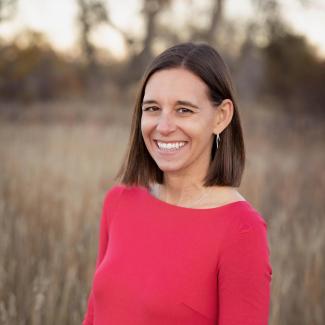 About the Author
Liz Dzwonczyk is a PhD candidate in CU Denver’s Geography, Planning, and Design program. Her research interests include heat vulnerability, microclimates, and health geography. This research was published as part of her Dissertation, titled “The Unequal Burden of Heat: Spatial and Temporal Dimensions of Temperature, Vulnerability, and Mortality in Denver”. She will graduate in Spring 2026.
FAQs
Q: Why is this research important for Denver?
A: It’s the first to show how heat affects mortality at the neighborhood level in a semi-arid city, helping target public health efforts where they’re needed most.
Q: Who can benefit from this research?
A: City planners, public health officials, community organizations, and anyone interested in building a more resilient, inclusive Denver.
Q: How can I learn more or get involved?
A: Read the full article online, or reach out to Liz for more information and access to her research maps.
Want to Dive Deeper?
Liz’s article, “Heat and mortality in a semi-arid city: A multi-scalar analysis of the impacts of temperature in Denver, Colorado” is open access until mid-January.
Liz’s article, “Heat and mortality in a semi-arid city: A multi-scalar analysis of the impacts of temperature in Denver, Colorado” is open access until mid-January.
Learn more about CU Denver’s Geography, Planning, and Design PhD program