
Meredit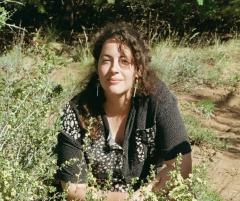 h Prentice
Master's Thesis Defense
Advisors: Dr. April Goebl, Dr. Timberley Roane, & Dr. Paula Fornwalt
Date: September 25th, 2026
Time: 12:00pm – 1:00pm
Location: Science Building 1111 Zoom Link: http://https://ucdenver.zoom.us/j/91565128311?pwd=C07a4TgS5KWe9j0krhk1wKXafqEwrT.1
Meeting ID: 915 6512 8311 Passcode: 509758
Post-fire Understory Plant Community Assembly in Ponderosa Pine Forests: Linking Above and Belowground Communities Across a Fire Severity Gradient
Within ponderosa pine forests in the southern Rocky Mountains, climate change and legacies of fire suppression are resulting in fires burning at higher severities in comparison to the historic fire regime of low to moderate severity fire. The understory plant community, which is comprised of forbs, graminoids, and shrubs, is crucial in facilitating post-fire recovery. In particular, the soil seed bank can play a vital role in kickstarting post-fire recovery due to its reserve of propagules which recruit after disturbance. Despite the potential importance of seed banks in post-fire recovery, little is known about what role it plays in post-fire community assembly and how fire severity impacts it in ponderosa pine forests. My study asked: how are understory plant communities impacted by novel fire regimes, specifically to shifts in fire severity, and what reserve of propagules does the soil seed bank contain that could impact future disturbance scenarios? Results revealed that in the aboveground community, burned areas had a higher abundance of introduced species and higher total plant cover compared to unburned areas. There was little differentiation across low, moderate, and high severity plots indicating that fire had a uniform impact on the aboveground community. In the soil seed bank, despite there being an overall trend of burned soils having a higher abundance of introduced species, there was more differentiation across fire severities. Additionally, unburned areas had a lower number of seedlings and a lower abundance of introduced species in the seed bank compared to burned areas, indicating that post-fire conditions of exposed soil and increased light availability might favor the establishment of off-site introduced species. Overall, these results demonstrate that in low elevation ponderosa pine forests situated in the wildland urban interface, understory plant communities might be negatively impacted by fire, regardless of severity, and that the soil seed bank might not play a significant role in post-fire recovery of the native plant community.