

Office: Plaza M108H
|
Mailing Address: |
Physical Location: |
Office Hours:
ONLINE Office hours by appointment via david.hildebrand@ucdenver
Expertise Areas: American Philosophy, Philosophy of Media and Technology, Artificial Intelligence Ethics, Aesthetics, Epistemology, John Dewey, Pragmatism, Neopragmatism, Richard Rorty
Education & Degrees
Ph.D., Philosophy, University of Texas at Austin, 1997
B.A., Philosophy, University of Pennsylvania, 1987
Courses Taught
CU Denver Catalog Course Descriptions Can Be Found Here
Additional course descriptions (actually taught versions of catalog courses) can be found here.
PHIL 4101/5101: Pragmatism: Classical American Philosophy
PHIL 4220/5220: Art, Beauty, and Aesthetic Criticism: Philosophy of Art
PHIL 4740/5740: Empiricism
PHIL 4900/5900: John Dewey
PHIL 4920/5920: Philosophy of Media and Technology
PHIL 3001/5001 The Ethics of Artificial Intelligence (AI)
PHIL 3050/5050: Propaganda: Truth, Lies, and Freedom
PHIL 3360 - Epistemology
PHIL 1012: Truth, Reality, and the Good Life: Introduction to Philosophy
PHIL 1020: Right, Wrong, and Seeing the Difference: Introduction to Ethics
Bio
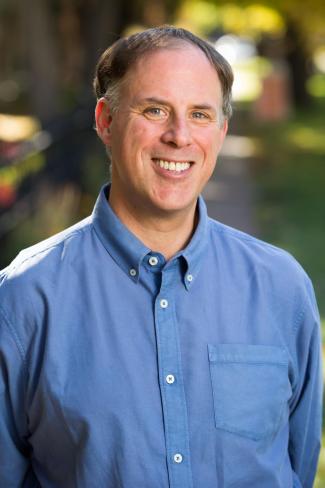
David L. Hildebrand is a Professor of Philosophy at the University of Colorado Denver and served as Chair from 2013-2021. Professor Hildebrand serves numerous national and international academic societies and journals and is also responsible for creating and maintaining a number of philosophical websites (including his own davidhildebrand.org). He is a past President of the Society for the Advancement of American Philosophy and the Southwestern Philosophical Society.
Professor Hildebrand's primary research areas include American Philosophy, Pragmatism & Neopragmatism, and epistemology. He is recently interested in (publishing, lecturing, and teaching) on Artificial intelligence's ethical and philosophical ramifications. Other interests include the language-experience tension in pragmatism and neopragmatism, the nature of pragmatic objectivity, and the application of pragmatism to areas outside of philosophy. His current interests include the ways technology influences lived aesthetics and vice-versa. In particular, he’s researching the influences of technology on musical experience, education, and public conversation, especially in regards to democratic problem-solving.
Get to know more about your professor ahead of time by checking out a couple of his featured YouTube videos. If you are enrolled in his PHIL 1012: Introduction to Philosophy, click here and if you're enrolled in his PHIL 4920/5920 Philosophy of Media Technology, click here.
Selected Publications
Books Authored:
"John Dewey: A Beginner's Guide", Oxford, UK: Oneworld Press, 2008.
"Beyond Realism and Antirealism: John Dewey and the Neopragmatists", Vanderbilt University Press, 2003.
Books Edited:
John Dewey's Experience and Nature: A Critical Guide (co-edited with Nicola Ramazzotto), Cambridge University Press (forthcoming, 2026)
Published Articles and Book Chapters:
A decent, cumulative list is here: https://philpeople.org/profiles/david-l-hildebrand/publications?order
"Preserving Meaning in an Age of Algorithms and AI" in Contemporary Aesthetics (2025)
"Autonomy, Ethics, and Inquiry in an Age of Algorithmic AI" in Southwest Philosophy Review (2025)
Democracy without autonomy?: Information technology's manipulation of experience and morality in Michael G. Festl (ed.), John Dewey and Contemporary Challenges to Democratic Education (Routledge, 2025)
“What Are Data and Who Benefits” in Anders Buch et al. (eds.), Framing Futures in Postdigital Education. Critical Concepts for Data-driven Practices (Springer, 2024)
“John Dewey.” The Stanford Encyclopedia of Philosophy, Edward N. Zalta (ed.), 2018, revised 2024
“Experience is not the Whole Story: the Integral Role of the Situation in Dewey's Democracy and Education”, in Journal of Philosophy of Education: The Philosophy of Education Society of Great Britain. (Oxford: Wiley), 2018
"The Paramount Importance of Experience and Situations in Dewey's Democracy and Education", in Educational Theory vol. 66, 2016.
"Art is not Entertainment: John Dewey’s Pragmatist Defense of an Aesthetic Distinction", in Southwest Philosophy Review vol. 31, 2015.
"Dewey’s Pragmatism: Instrumentalism and Meliorism", Chapter in The Cambridge Companion to Pragmatism ed. Alan Malachowski. Cambridge, U.K.: Cambridge University Press. December 2013.
"Pragmatic Democracy: Inquiry, Objectivity, and Experience", in Metaphilosophy vol. 42, October 2011