
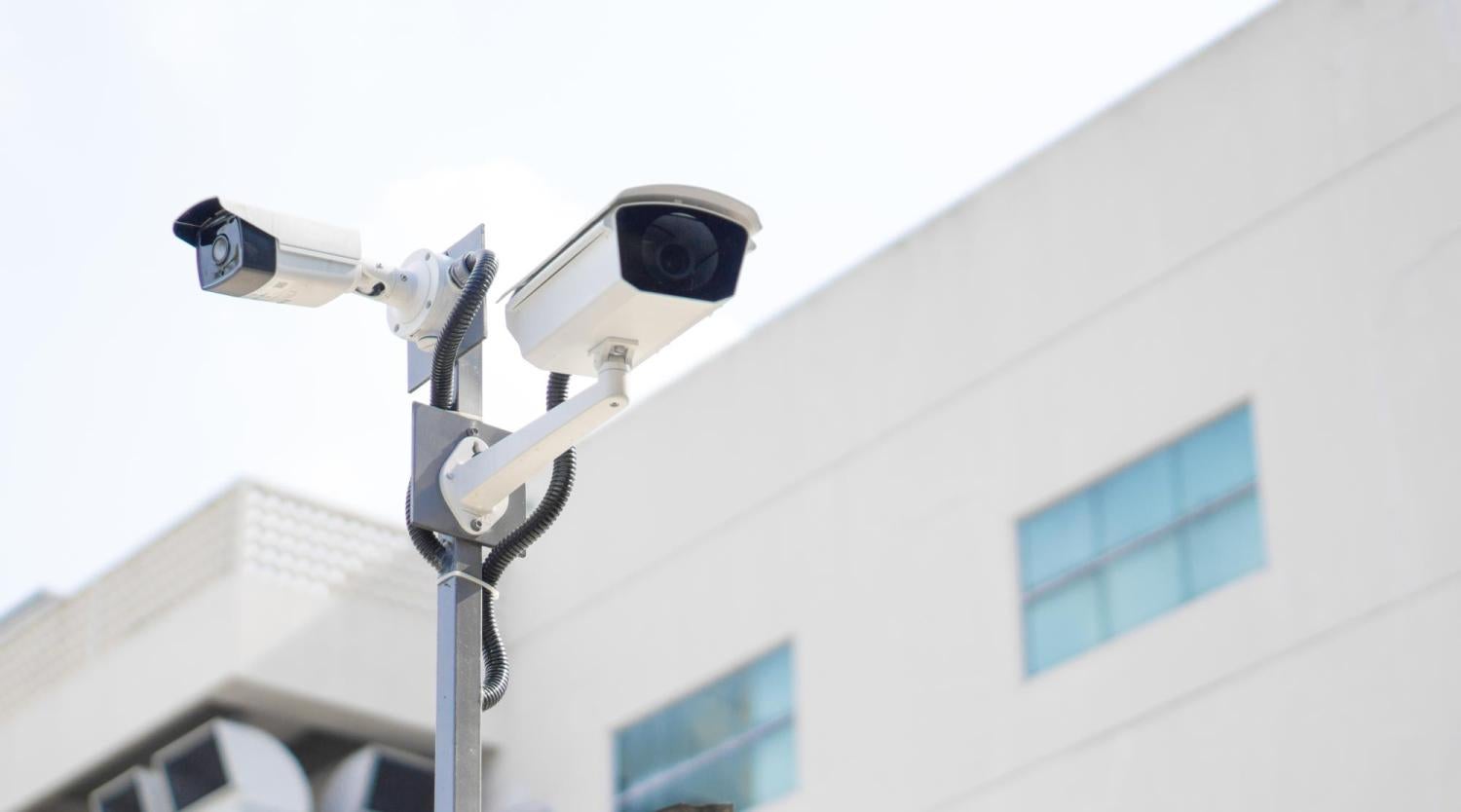
Coloradans are asking harder questions about police surveillance technology, especially automated license plate readers (ALPRs) that log where and when vehicles move through our communities. And they’re not just asking who makes the cameras. They’re asking who can access the data, how long it’s kept, how it’s shared, and what independent oversight exists to prevent misuse.
That conversation recently featured CU Denver sociology professor and department chair Keith Guzik, who studies how police adopt and use emerging technologies. In interviews with Rocky Mountain PBS and Axios Denver, Guzik underscored a key point: switching surveillance technology providers does not automatically reduce privacy risks. Safeguards, transparency, and accountability do.
ALPRs are camera systems that capture images of passing vehicles and record information tied to those images, including:
- License plate number
- Timestamp
- Location
Law enforcement agencies use ALPR data to support investigations, including locating stolen vehicles and identifying vehicles connected to certain cases. But these systems can also create detailed records of everyday movement, including people who are not suspected of wrongdoing. Rocky Mountain PBS describes the systems as tools that let police search license plate and vehicle information during investigations, with thousands of agencies using similar technology nationwide.
Why Colorado Communities Are Moving Away From Flock
In 2026, multiple Colorado communities dropped or moved to replace Flock Safety’s ALPR system amid public concern about privacy and potential misuse.
Rocky Mountain PBS reported that Denver, Douglas County, Longmont, and Durango have switched or announced plans to switch from Flock to Axon, often citing community pushback and the fact that Axon already provides other tools departments use (like body cameras and evidence-management systems).
Axios Denver similarly reported that at least a dozen cities and counties have dropped Flock or moved to replace it this year, with some agencies abandoning ALPRs and others turning to competitors such as Axon.
Flock Vs. Axon: What Changes And What Doesn’t
One reason this debate can feel confusing is that “camera” is shorthand for something much bigger: a data system. Guzik told Rocky Mountain PBS that the core issue isn’t only what the camera captures, but how the broader system collects, processes, stores, and shares data.
According to Guzik:
- Flock’s system is known for a wide, nationwide network focused on sharing license plate data between departments.
- Axon’s approach can connect ALPR data with other tools a department may already use, including body-worn cameras, dashboard cameras, and Axon’s Evidence.com ecosystem.
Axios reported additional differences in how sharing can work:
- Axon limits sharing to individual agreements between departments, rather than a nationwide network by default.
Still, both systems can collect the same type of location-based license plate data. That’s why Guzik emphasizes that the provider change alone doesn’t resolve the underlying privacy concerns.
The Real Question: What Rules Govern The Data
Guzik’s message across both stories is straightforward: privacy outcomes depend heavily on local policy and oversight, not just the vendor.
Implementation choices that matter include:
- Retention limits (how long ALPR data is stored)
- Access controls (who can search the database and under what circumstances)
- Audits and documentation (how searches are logged and reviewed)
- Transparency with the public (what is shared in town halls, meetings, and public reports)
- Independent oversight (outside review, not only internal monitoring)
Rocky Mountain PBS noted that Axon has tools that can document searches and audit access, but Guzik emphasized that departments still make key choices about permissions and use—and that outside oversight is still more aspiration than consistent reality.
Axios reported that Denver’s new Axon system still collects license plate data, but the city reduced retention from 30 days to 21 days and limited database access to local public safety personnel—illustrating how local rules can change the privacy impact even when the technology remains similar.
“If we’re only concerned about Flock … we’re missing the issue,” Guzik told Axios, pointing to the need for safeguards regardless of the company providing the cameras.
Why This Matters To Students And The Denver Community
For CU Denver students and our neighbors across the metro area, this isn’t an abstract policy debate. Surveillance tools shape day-to-day life:
- Who feels watched in public spaces
- How data about movement can be used now or later
- Whether safeguards keep pace with rapidly evolving technology
Guzik’s work helps communities move beyond a single headline or company name and focus on what protects people in practice: clear policies, meaningful transparency, and accountability that the public can trust.
Questions To Ask At A Town Hall Or Community Meeting
If your city or county uses ALPRs (or is considering them), Guzik suggests staying vigilant and engaged. Consider asking:
- What is the data retention period, and why was that length chosen?
- Who can access the system, and what training is required?
- Are searches tied to a case number or offense category, and is that requirement enforced?
- How often are audit logs reviewed, and by whom?
- What consequences exist for misuse?
- What independent oversight exists outside the department?
- What information will be reported publicly, and how often?
Rocky Mountain PBS reported Guzik’s view that these systems should be discussed in town halls and municipal meetings, with meaningful information presented to the public and ideally independent oversight monitoring use.
 Keith Guzik, Department Chair of Sociology, studies how police adopt and use emerging technologies, including surveillance tools like automated license plate readers. His research looks at how technology, policy, and oversight shape privacy and accountability in everyday policing.
Learn more about Sociology at CU Denver
Read the coverage
Rocky Mountain PBS Newsstory