
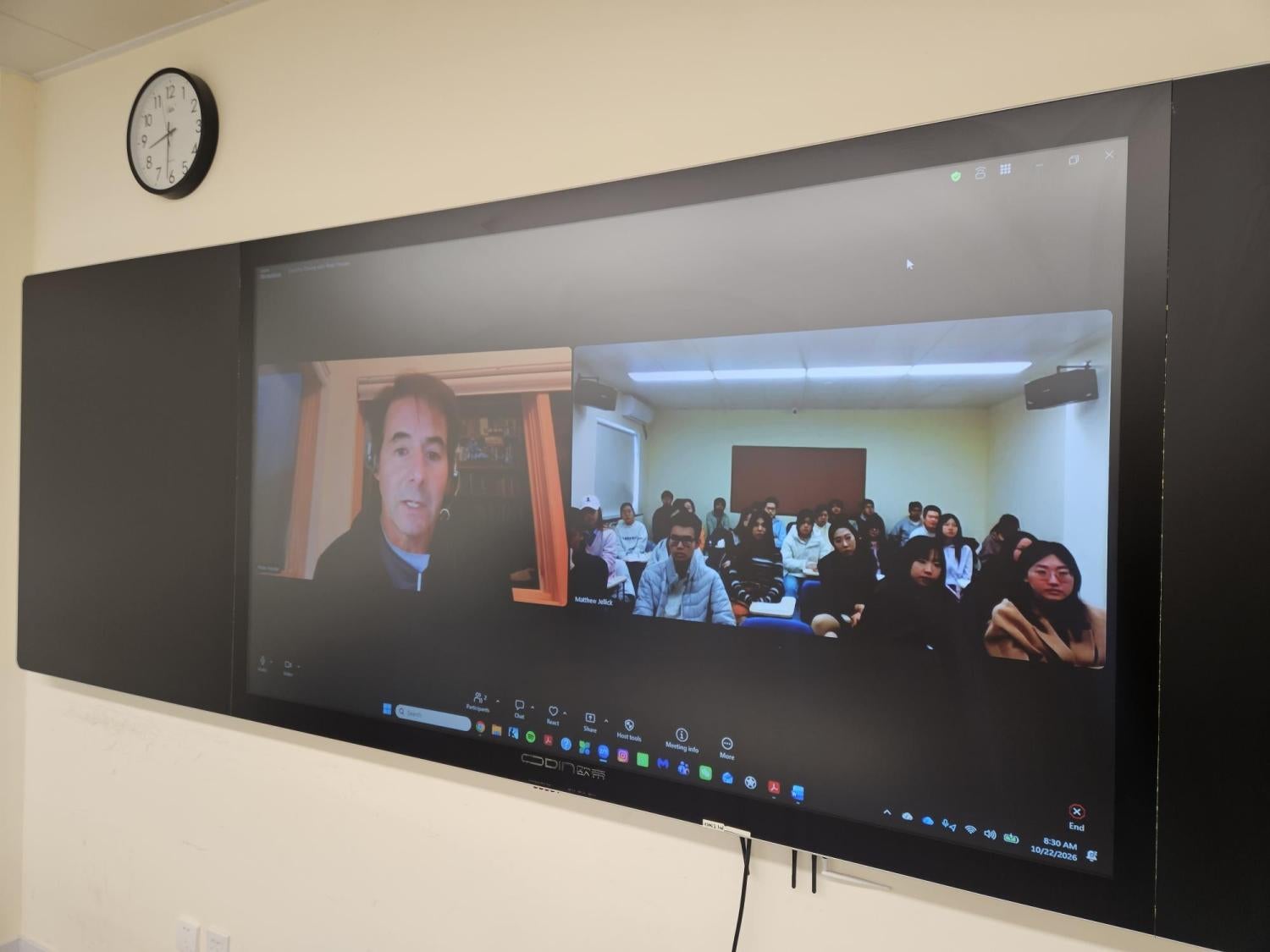
In the first half of the semester, students in Matthew Jellick’s ENGL 2600 course read Country Driving: A Journey Through China from Farm to Factory by Peter Hessler, finishing the book in mid-October.
Soon after, the class had the chance to meet Hessler on Zoom for an hour-long conversation. Before the visit, each student drafted a question and a short rationale explaining what they were curious about and why it mattered to them. The result was a discussion shaped by student voice, close reading, and real questions about culture, history, and change.
Why This Author Visit Mattered
Hessler, a longtime writer on China who currently lives in Colorado and writes for The New Yorker, responded directly to student questions while also making space for deeper context.
Students didn’t just ask what happened in the book. They asked what has changed since Hessler reported these stories in the early 2000s, and how those changes show up in everyday life. The conversation highlighted how quickly places can transform, and how important it is to approach that change with curiosity, care, and attention to lived experience.
Reading Country Driving In Three Parts
Country Driving is a work of historical nonfiction structured in three sections:
- The Wall
- The Village
- The Factory
That structure gave the class clear “entry points” for discussion, from rural life and local traditions to economic growth and industrialization. For students studying and living in Beijing, reading the book in this setting made the themes more immediate. Pairing the text with an author interview added another layer, connecting course concepts to the perspective of someone who has been writing about China for nearly three decades.
Learning That Connects Beyond The Classroom
Experiences like this author visit are a reminder of what strong liberal arts learning looks like in practice: students engage deeply with a complex text, ask thoughtful questions, and use conversation to test ideas in real time.
In ENGL 2600, the reading and discussion didn’t stop at comprehension. Students used the book to think critically about how communities change, how stories get told, and what it means to understand a place across time. The author visit helped turn those questions into dialogue, giving students a model for engaged, respectful inquiry they can carry into future coursework and careers.