
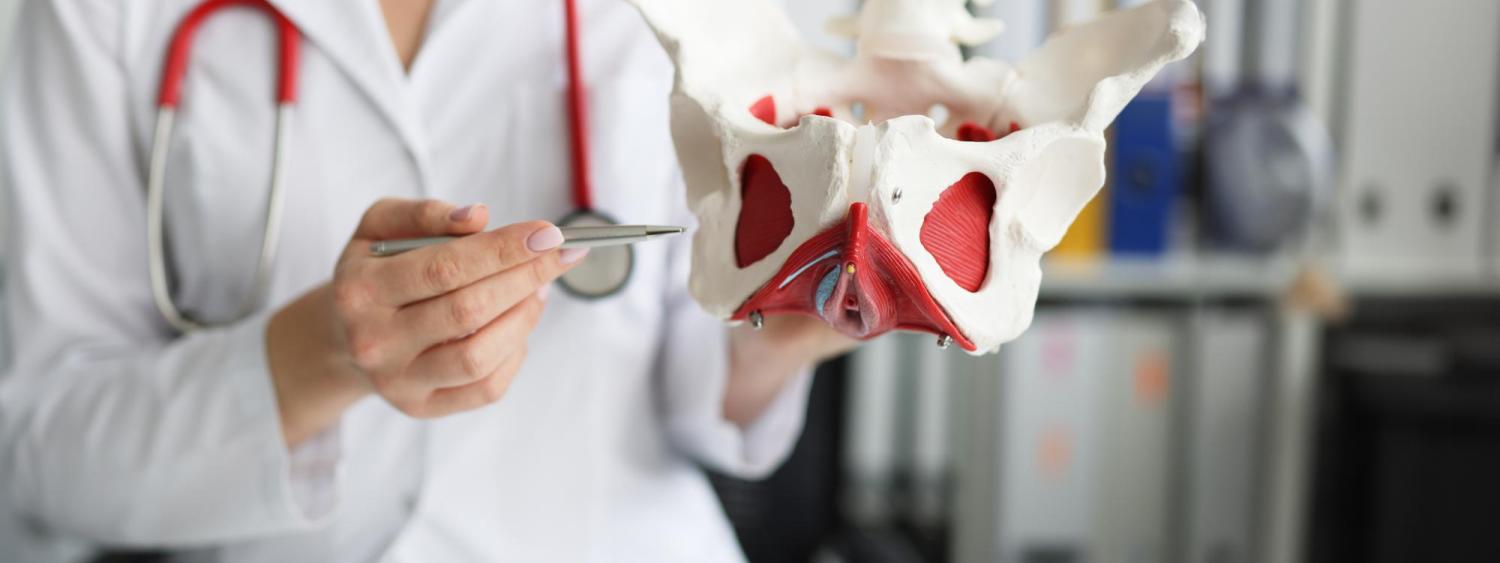
If you've ever wondered why human childbirth can be difficult, you're not alone. It's a question that sits at the crossroads of biology, culture, and health care. In a recent New Scientist feature, journalist Colin Barras explored the debate among anthropologists about how evolution has shaped the human birth process and why this perspective matters today. CU Denver Anthropology faculty member Anna Warrener contributes to this important conversation in her interview with Barras.
An idea called the "obstetrical dilemma" has been the prominent model for interpreting the evolution of human birth since the 1960s. The "dilemma" is thought to be the result of a trade-off between the need for a narrow pelvis for efficient bipedal walking and running and the need for a wide pelvis in women to birth large-brained human babies. According to the "obstetrical dilemma" model, this trade-off is why human birth is sometimes complicated and dangerous.
There is significant debate among anthropologists about whether this model best explains modern childbirth complications. Dr. Warrener's research has shown there is no negative effect on walking and running efficiency from having a wider pelvis. She also highlights the importance of thinking beyond evolutionary "just so" stories since these are scientifically limiting and can be misinterpreted by the public, contributing to harmful stereotypes about women's bodies and childbirth experiences.
Warrener's perspective reflects a bigger shift in the field: childbirth risk can't be pinned on a single evolutionary "design problem." Researchers are increasingly interested in how nutrition, environment, and culture are contributing to birth complications. These broader perspectives, joined with evolutionary thinking, are more likely to produce an accurate understanding of how and why modern childbirth can be difficult and dangerous.