
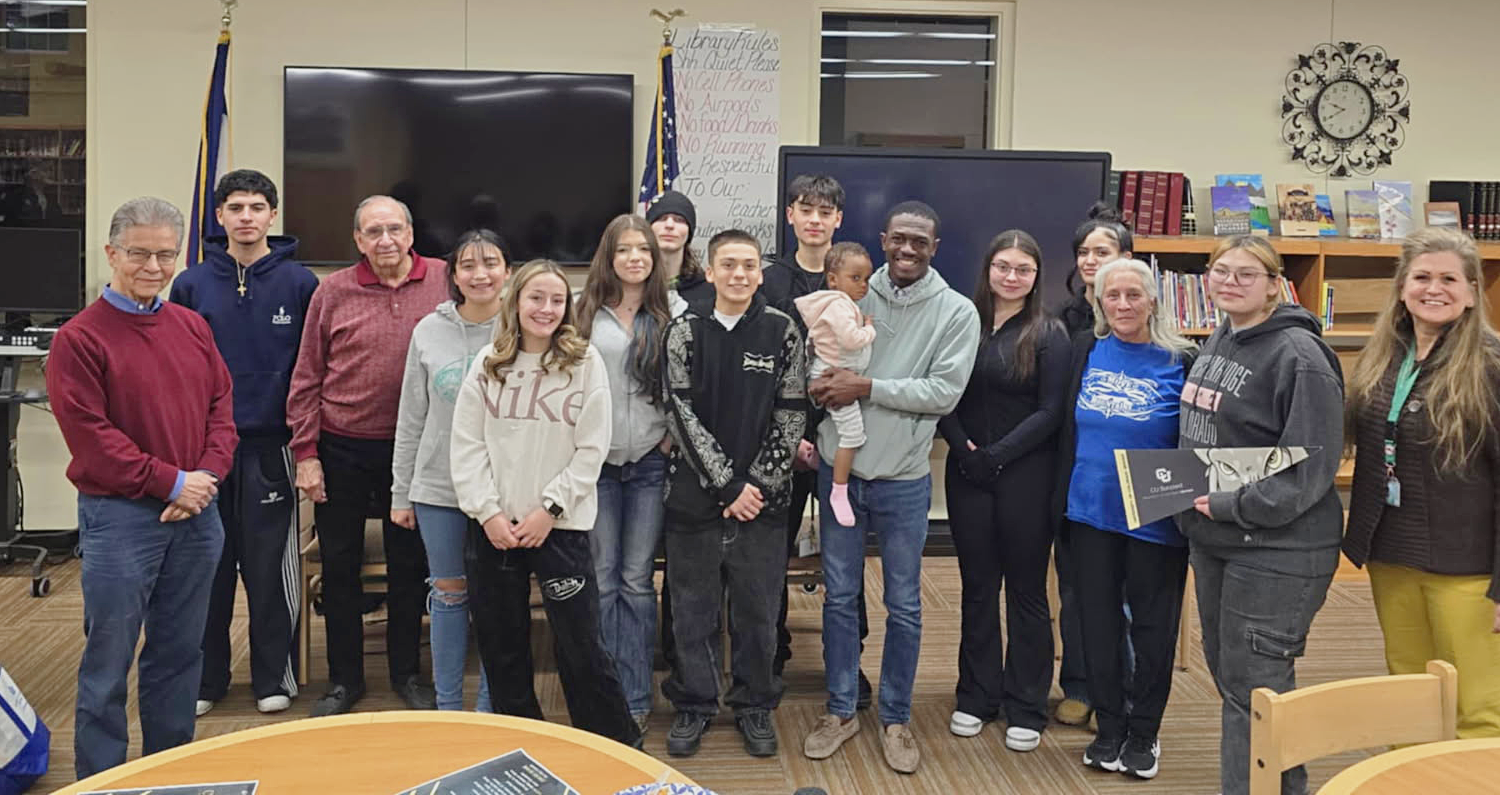
Explore the CU Succeed Program
High school students across Colorado’s rural communities are gaining access to one of the fastest-growing fields in the modern workforce—data science—thanks to an expanding initiative from the University of Colorado Denver’s College of Liberal Arts and Sciences.
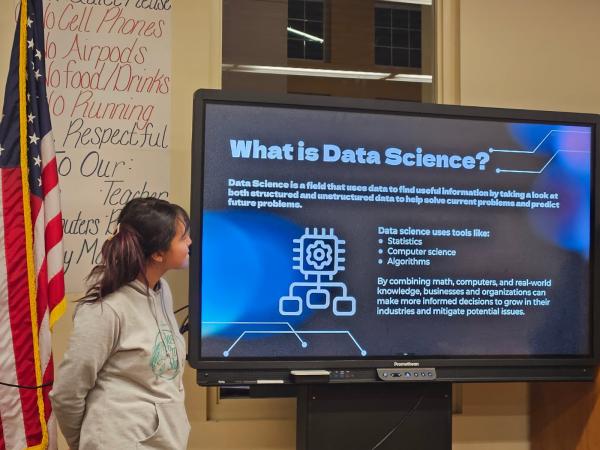
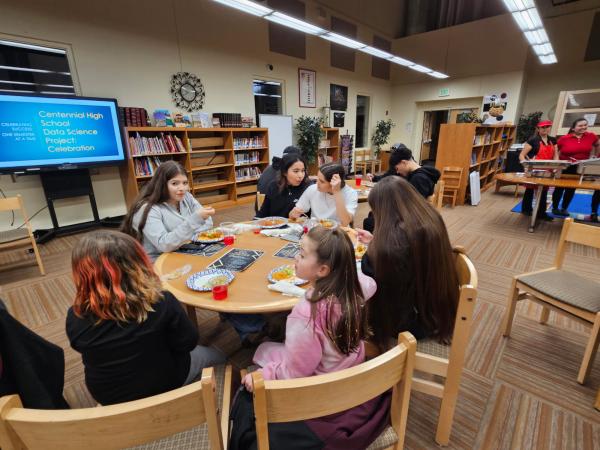
Through the CU Succeed concurrent enrollment program, students in regions such as the San Luis Valley can now begin studying data science while still in high school, earning college credit and building skills in statistics, programming, and data analysis.
The program represents a powerful intersection of education, workforce development, and community partnership. By introducing data science education early, CU Denver is helping rural students meet their moment—and build the momentum needed to shape both their own futures and the future of their communities.
At the same time, the initiative reflects a broader strategy: expanding access to high-demand skills while strengthening the economic potential of rural Colorado.
CU Succeed has long served as a bridge between high school and college.
The program partners with high schools across Colorado to offer affordable college-level courses taught by qualified high school instructors, allowing students to earn college credit without leaving their classrooms. For many participants, CU Succeed represents the first step toward higher education.
The new data science pathway expands those opportunities into a field that touches nearly every industry.
Students enrolled in the program begin learning foundational concepts in:
- Statistics and quantitative reasoning
- Computer programming and coding fundamentals
- Data visualization and interpretation
- Analytical problem-solving
These skills are increasingly essential in today’s workforce, where organizations rely on data to guide decisions, improve efficiency, and identify new opportunities.
For students in rural communities—where access to specialized STEM coursework can be limited—the program provides a meaningful academic advantage. It allows students to explore emerging technology fields while gaining college credit and confidence in their academic abilities.
Just as importantly, it introduces students to a new way of thinking about information and problem-solving.
Why Data Science Matters for Rural Colorado
Data science has become one of the most influential disciplines of the digital age.
From healthcare and agriculture to environmental science and public policy, organizations rely on data to understand trends, forecast outcomes, and develop innovative solutions.
But access to the education needed to work in these fields is not evenly distributed.
Across Colorado, economic and educational indicators show that rural communities often face barriers to advanced educational opportunities. Research from CU Denver highlights that many rural counties have lower bachelor’s degree attainment rates and lower median incomes than the state average, underscoring the need for expanded workforce development pathways.
Programs like CU Succeed’s data science initiative aim to address those challenges by introducing students to high-demand technical skills early in their academic journeys.
The strategy recognizes that economic growth in the 21st century increasingly depends on knowledge, technology, and the ability to interpret complex data.
By equipping rural students with those skills, CU Denver is helping communities build the capacity to compete in an increasingly data-driven economy.
Building a Rural High-Tech Talent Pipeline
The CU Succeed data science pathway is part of a larger vision developed by the College of Liberal Arts and Sciences to strengthen technology education in rural Colorado.
That vision centers on the idea of developing “intellectual infrastructure”—a network of people with the knowledge and technical skills needed to support innovation and economic growth within their own communities.
Rather than focusing solely on physical infrastructure such as buildings or transportation systems, this approach emphasizes investment in human capital.
The broader Rural High-Tech Hub model includes several interconnected components:
Education and Training - Students develop foundational skills in areas such as mathematics, computer programming, and data analytics.
Work-based Learning - Participants gain hands-on experience through internships or collaborative projects with local businesses and organizations.
Community Innovation - Local partnerships create opportunities for students to apply technological skills to real challenges in their regions.
Together, these elements help create a critical mass of technology-literate professionals who can support economic development and innovation across rural communities.
The CU Succeed data science program represents an early step in building that pipeline by introducing students to the field while they are still in high school.
 .
. 
Learning That Connects Across Disciplines
One of the defining strengths of data science is its versatility.
The ability to collect, analyze, and interpret data can be applied across a wide range of industries and academic fields. A student interested in agriculture might analyze crop data, while another interested in public health could study disease patterns or healthcare access.
This interdisciplinary approach aligns closely with the mission of CU Denver’s College of Liberal Arts and Sciences.
As the university’s largest college, CLAS connects disciplines across the sciences, social sciences, and humanities to address complex societal challenges. Its messaging framework emphasizes that learning leads to progress, research leads to impact, and collaboration leads to innovation.
Data science reflects that philosophy in practice.
By teaching students how to analyze information and uncover patterns, the field empowers them to approach problems from multiple perspectives and develop solutions grounded in evidence.
For rural communities navigating economic change and technological transformation, those skills can be particularly valuable.
Encouraging Students to Stay and Lead
One challenge many rural communities face is the migration of young talent to larger cities in search of educational and professional opportunities.
Programs like CU Succeed aim to change that dynamic.
By connecting data science education with local industries and community organizations, the initiative helps students see how their skills could benefit the places where they grew up.
For example, data analytics can help rural businesses improve operations, assist public agencies in understanding population trends, or support healthcare providers in improving patient outcomes.
When students recognize the potential impact of their expertise, the idea of building a career in their home region becomes more compelling.
In this way, CU Denver’s approach is not simply about preparing students for jobs—it is about empowering them to become innovators and leaders within their own communities.
Meeting the Moment in Higher Education
The CU Succeed data science initiative also reflects broader changes taking place in higher education.
Students increasingly seek educational pathways that are flexible, affordable, and closely connected to career opportunities. Communities, meanwhile, are looking to universities as partners in addressing workforce and economic challenges.
CU Denver’s College of Liberal Arts and Sciences is uniquely positioned to respond to those expectations.
As the intellectual core of the university, CLAS supports a wide range of interdisciplinary programs and partnerships that connect research, education, and community engagement. Its messaging framework emphasizes momentum—the idea that moments of discovery can lead to lasting progress for students and communities alike.
Programs like CU Succeed demonstrate that philosophy in action.
By offering high school students the opportunity to study data science and earn college credit early, the program transforms curiosity into opportunity.
A single course can spark interest in analytics. That interest can lead to further study. And that education can translate into innovation, leadership, and economic growth.
Building Opportunity Across Colorado
The success of the CU Succeed data science initiative depends on collaboration.
High school educators, university faculty, community leaders, and regional employers all play important roles in creating a learning ecosystem that connects academic preparation with real-world impact.
Together, these partners are helping expand educational access while preparing the next generation of technology-literate professionals.
For CU Denver, the program reflects the university’s broader mission as a public research institution dedicated to serving communities across the state.
While the university’s campus sits in the heart of downtown Denver, its influence extends far beyond the city.
Through initiatives like CU Succeed, CU Denver is ensuring that students in rural communities—from the San Luis Valley to other regions of Colorado—have the opportunity to explore new academic pathways and build meaningful careers.
For many students, their first exposure to data science may begin with a simple question.
- How do we identify patterns in information?
- How can data help us understand our communities?
- How can technology help solve real problems?
As they begin answering those questions, students discover that data science is more than a technical skill—it is a way of understanding the world.
That realization can be transformative.
It is the moment when curiosity becomes possibility.
And when programs like CU Succeed provide the support and opportunity to pursue that possibility, those moments become something more: momentum.
Momentum that carries students forward into college, careers, and community leadership—and momentum that helps shape the future of rural Colorado.