
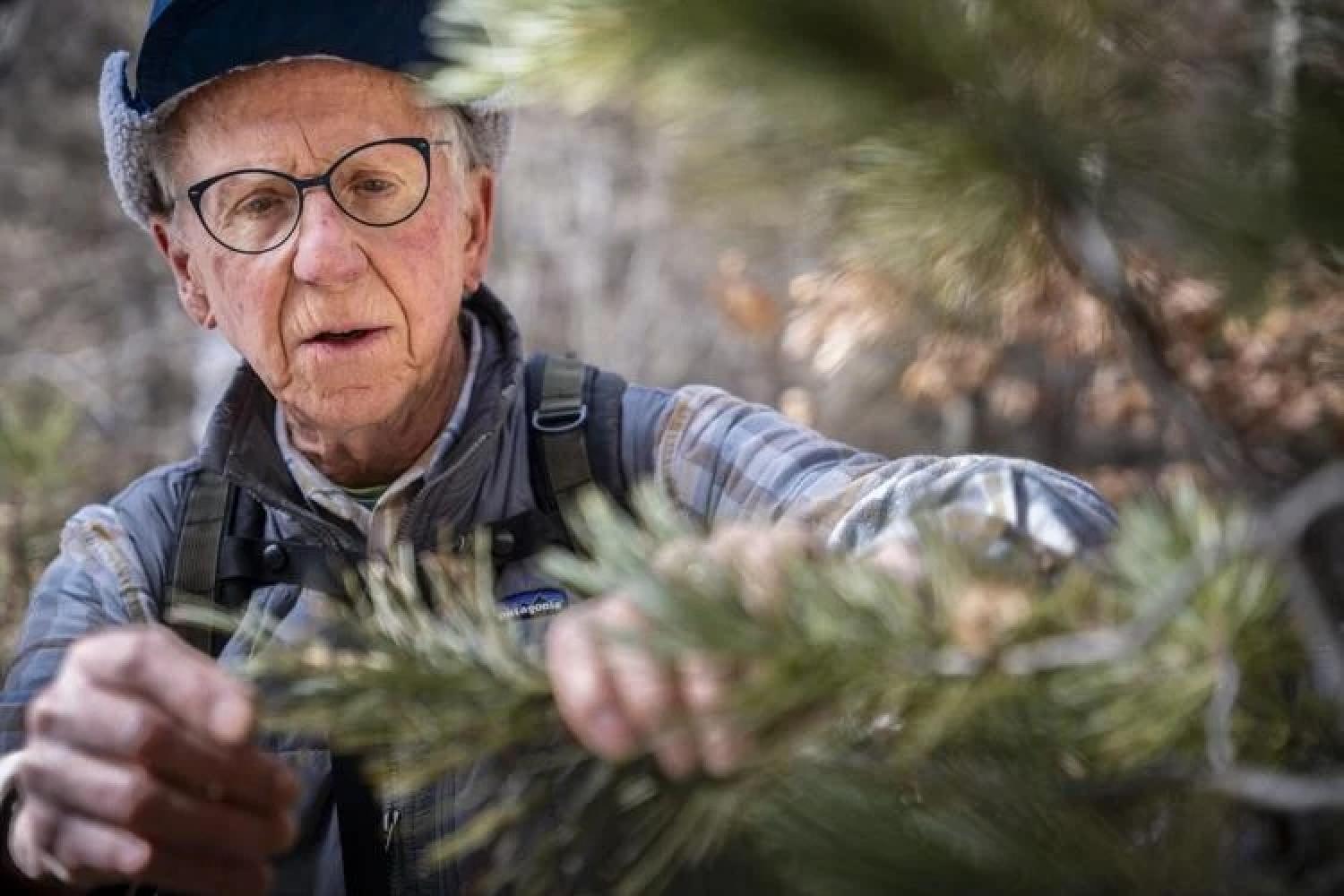
Sam Hitt, president of Santa Fe Forest Coalition, inspects the health of a young white pine tree Wednesday in Santa Fe National Forest’s Black Canyon. Hitt, who is the founder of WildEarth Guardians, has been advocating for protections for the species from dangers such as the white pine blister rust. Photo via Nathan Burton / santafenewmexican.com
A forest can look healthy from a distance and still be in trouble up close. That’s the concern driving a recent conversation in northern New Mexico about the southwestern white pine, a native tree found in the Santa Fe National Forest and across parts of the Southwest.
In a Santa Fe New Mexican news story, community advocates and forest leaders point to the same goal: keep this species on the landscape. The open question is how to do that—especially as multiple threats pile up at once.
What’s Happening In Santa Fe National Forest
The Santa Fe Forest Coalition, led by president Sam Hitt (a former founder of WildEarth Guardians), has raised concerns about recent losses of southwestern white pine and what those losses could mean for the long-term health of the forest. In response, the story notes that the forest supervisor recognizes the importance of protecting the species when possible—signaling that both community advocates and forest managers are paying close attention to what happens next.
Why Southwestern White Pine Matters
Southwestern white pine isn’t just “another conifer.” As described in the article, it plays an important ecological role in the forest—supporting the broader web of life that depends on native tree diversity and resilient high-elevation ecosystems. When a single species declines, impacts can ripple outward: habitat shifts, food sources change, and forests can become less resilient to stress.
The Threats Driving Decline
Sam Hitt referred CU Denver's Integrative Biology Professor Diana Tomback, who was interviewed for the story. Diana emphasized that southwestern white pine is under pressure from several compounding threats:
- White pine blister rust, an introduced disease
- Mountain pine beetles
- Fire
- Climate change
Together, these stressors can reduce survival of seedlings and mature trees—and make recovery harder even when conditions improve.
A Key Opportunity: Protecting Natural Resistance
One of the most hopeful points in the story is also one of the most practical. Diana explained that some individual southwestern white pines carry resistance to white pine blister rust. That means they may be especially valuable for the species’ future—and, when possible, should be protected so they can continue to persist and contribute to the next generation of trees.
What This Means For Students And The Public
This story is a case study in how environmental decisions actually happen: through a mix of science, community advocacy, and on-the-ground management constraints. It also underscores a reality shaping forests across the West: the challenges aren’t isolated. Climate, pests, disease, and fire interact—and solutions have to be flexible, evidence-based, and collaborative.
FAQ
What is southwestern white pine?
A native forest tree species found in parts of the Southwest, including Santa Fe National Forest.
Why is southwestern white pine declining?
The article highlights multiple threats: white pine blister rust (introduced), mountain pine beetles, fire, and climate change.
Can southwestern white pine recover?
Some trees show resistance to white pine blister rust. Protecting these individuals can support long-term resilience.